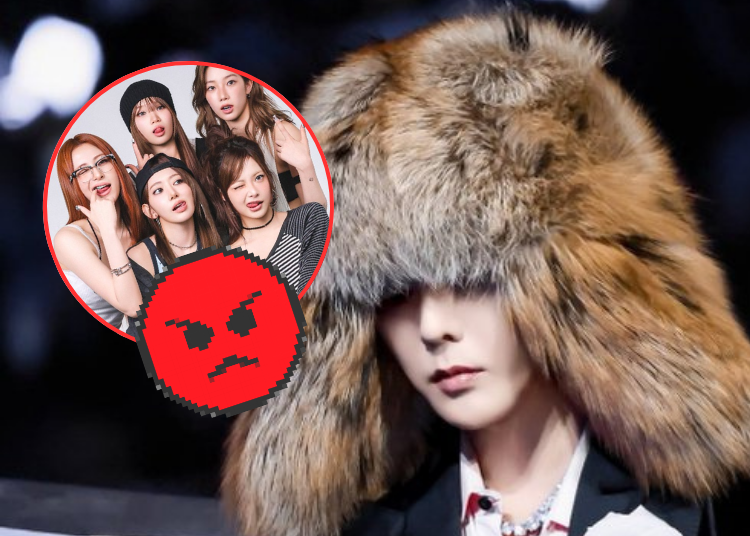
Recently, a media article published by the Korean outlet Dailian went viral and sparked wide controversy due to its hostile tone toward HYBE girl groups, specifically LE SSERAFIM and ILLIT, within a piece discussing G-Dragon’s live performance at the 2025 MAMA Awards. Although the article was supposed to focus on the controversy surrounding G-Dragon, the writer’s emphasis on criticizing HYBE’s girl groups—while praising aespa—triggered accusations of bias.
The article opened by addressing the debate over G-Dragon’s performance, noting that the video of his stage at the 2025 MAMA Awards, held on November 29 and uploaded to the Mnet K-Pop YouTube channel on the 2nd of the month, has accumulated around 2.66 million views.
G-Dragon delivered a 15-minute live performance of “DRAMA,” “Heartbreaker,” and “Untitled,” but he received harsh criticism and sparked debate over his vocal skills. Later, he posted a video of himself on the official MAMA Instagram account with an emoji expressing dissatisfaction, apologizing for the condition of his voice. This prompted mixed reactions. However, it was difficult to find anyone who praised the live performance, with many pointing out that it was disappointing in several ways.
What angered HYBE fans, however, was not G-Dragon’s performance itself, but the section in which the writer brought up past controversies about LE SSERAFIM and ILLIT’s encore stages, attacking the production style of their songs and accusing producers of lowering the difficulty of their music.
The writer stated: “To reduce the burden of live performances, they sometimes adjust the difficulty of their songs. As for LE SSERAFIM, after the controversy surrounding their live performance of ‘Easy,’ they released ‘CRAZY’ as their comeback track. Half of the lyrics are filled with repetitive phrases such as ‘All the girls are girling girling,’ ‘tatatata,’ and ‘crazy.’ Despite the short comeback interval and limited vocal practice time, the members were able to perform it live with ease. Their recent single ‘Spaghetti’ also featured a relatively stable performance, as most of the song repeated the phrase ‘Eat it up.’”
The writer then continued his criticism by discussing ILLIT, saying that their title track “Borrowed Cat (Do the Dance),” released in June of this year, similarly relies on simple repetitive sounds, with a large portion of the chorus filled with short vocal syllables and phonemes such as “ttu-ttu-ttu,” “tata-tata,” and “kung-sil-nyaoong.”
In contrast, the article praised aespa, stating: “They took first place on music shows with ‘Supernova,’ the pre-release from their first full album. Their consistent live performances in every encore stage earned critical acclaim. aespa’s image as a talented girl group—combining strong performance with solid live skills—helped boost the song’s popularity.”
This paragraph heightened the frustration of LE SSERAFIM and ILLIT fans, especially since aespa themselves faced a series of lip-syncing accusations this year, along with their controversial appearance on Good Morning America.
Many fans felt that inserting LE SSERAFIM and ILLIT into an article discussing the controversy surrounding G-Dragon’s performance was a provocative move and an attempt to divert attention away from it. They also argued that praising other groups—including aespa—within the same context gave the impression that the article was deliberately comparing groups and elevating some at the expense of others, which intensified accusations of media bias.